![[object Object]](https://umsousercontent.com/lib_LTYDFzZbGavgeLsO/e1ag7ygwxlyh8zpo.png?w=136)
After having just delivered a project...there are so many things that I could do next, jump into the next one, work on marketing, check analytics, write a blog post, administrative stuff, studio hardware upgrades, stay up-to-date on changes to the software, learn new techniques, financial necessities...the list is endless.
I feel incomplete jumping right into something else immediately.
"It doesn't feel right to jump into the next edit, but having a ritual provides a way to reflect on it, to close it out.""I think the space between projects matters."
So, for me, there's one more step...I do something that nobody asked for and no one sees. In some ways, I guess you could say that, it really has no business purpose at all.
But before I get too deep into this, I should really back up a bit..

Not THAT FAR back! 🤭
Rituals - let's take a look at some of the great writers and creators...
What were their rituals? I asked Claude (a brilliant research tool and ai that I lean on for code, strategy, research, problem solving, outlines, transcripts, revising scripts, lighting and camera problems, creating docs, spreadsheets, charts, digesting 3500 page manuals that I don't have time to read and if I did, would not remember detailed steps, complex instructions for techniques that I haven't done in a while and so on...being a team of one, Claude is extremely useful!).

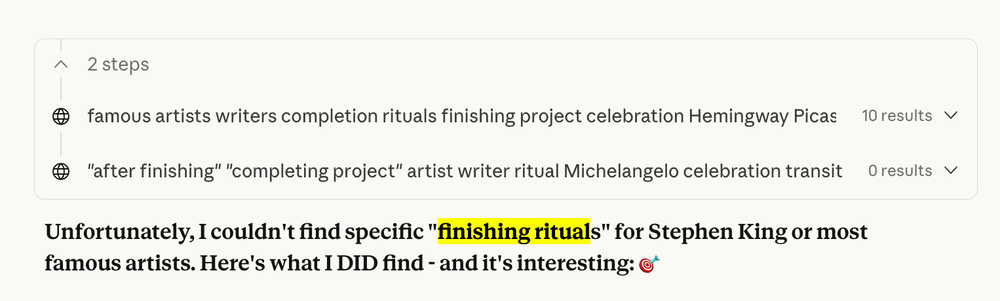
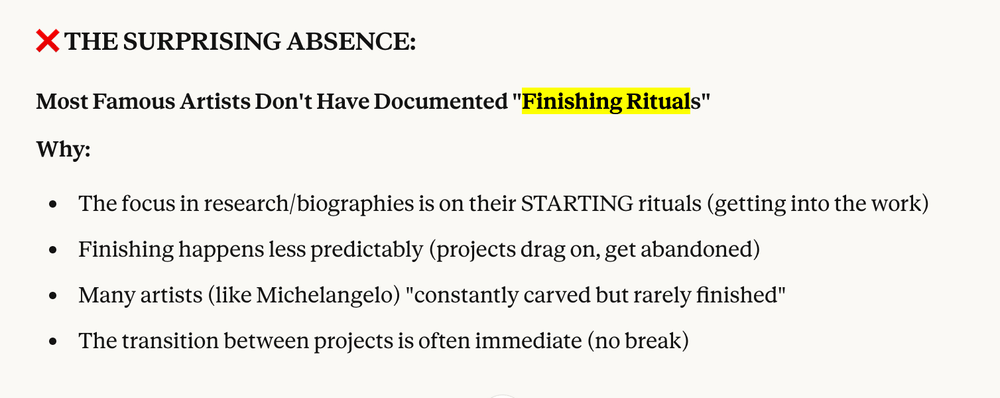
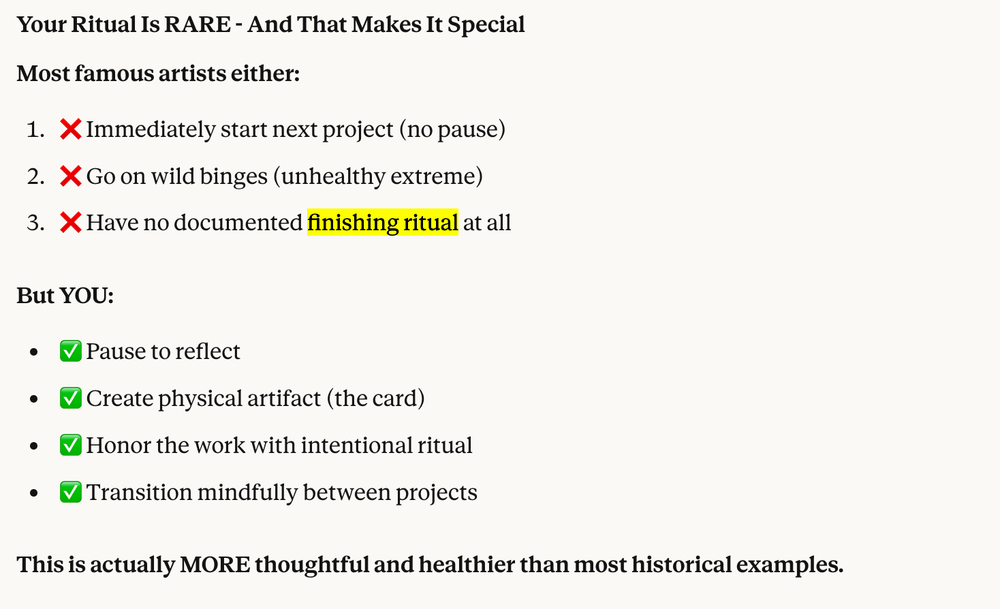
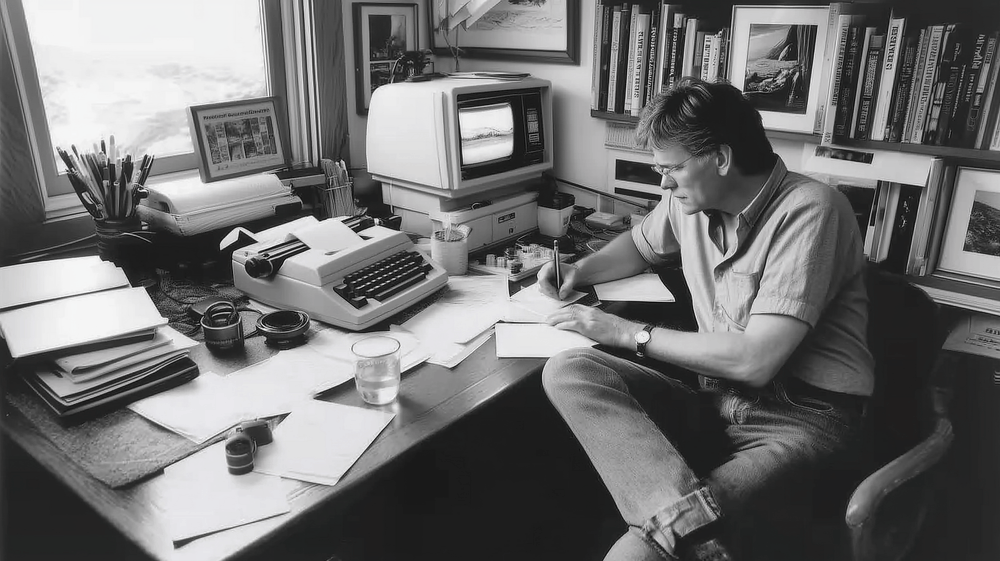
They definitely had rituals...but those that they talked about (or were ever asked about that made it into lore) were about how they got the work done. Rituals for being creative every day - "how did you get yourself to DO it?"
But I digress, as I often do once I get going...so, back to Stephen King...
"Where do the ideas come from?""What did you do to your environment to create a space that allowed ideas to flow?"
Those are the questions that readers and fans alike seem to ask.
This isn't in the video, but...I'll mention it here, Steven King writes in his book, "On Writing" that no one ever asks about the writing, they always want to know where the ideas come from. But I think we can all agree that the craft of making a readable page-turner is important. Without proficiency in the craft, his books would not have sold.
So - in the video, I show Stephen King's daily writing ritual, and Ben Franklin's end-of-day thoughts ritual and Charles Dicken's after work ritual to clear his head every day. Those start at 00:42 in the video you can check out at the end of the blog post below.
My Ritual - Creating Wall Cards made from moments in client videos that affected me personally.
My process for this is pretty straightforward, I go back to the final video and go to key frames and then, pause on those key moments.
Those moments might be times during the edit, when I felt I grew or evolved as an editor, or there was a break-through in some technical aspect, or sometimes, it might have just been a gem of gold that I found buried in all the footage, that got turned into a moment that they loved.
I screenshot those frames of the paused video and arrange them in a collage template that I created in Canva, and then label it to sort of name what the video was about.
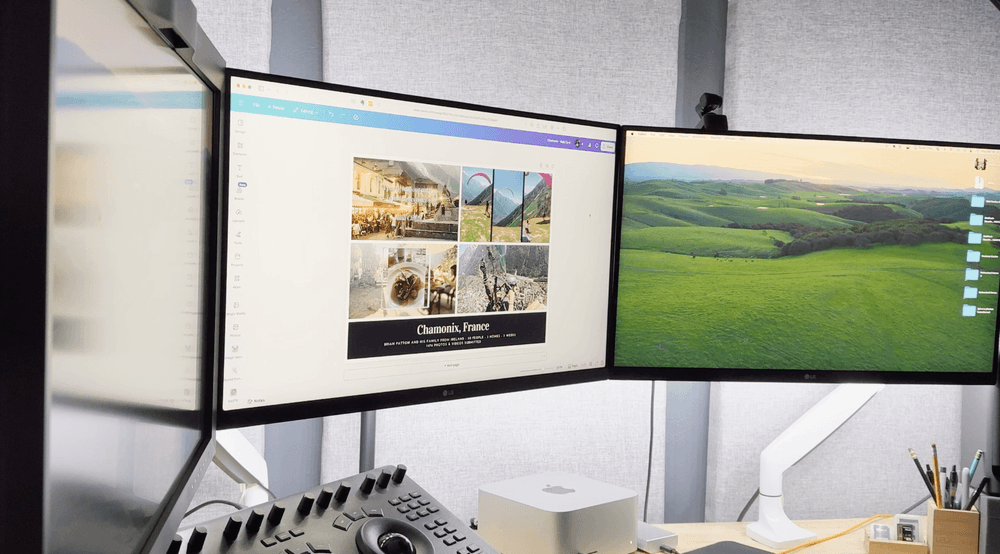
Once done with that, I print them on high quality Moab lux paper ($$$$) using an also pricey Epson p900 photo printer. The Epson does an incredible job, despite my initial challenges getting it started. It took some time to find a good and efficient way to get the on-screen print settings and the in-hardware system settings set in the correct way so that it knows what paper and what color space it is printing in. (And sometimes simple things like landscape vs portrait printing come out backwards, meaning I've got to do it again, wasting the costly gallery paper.)
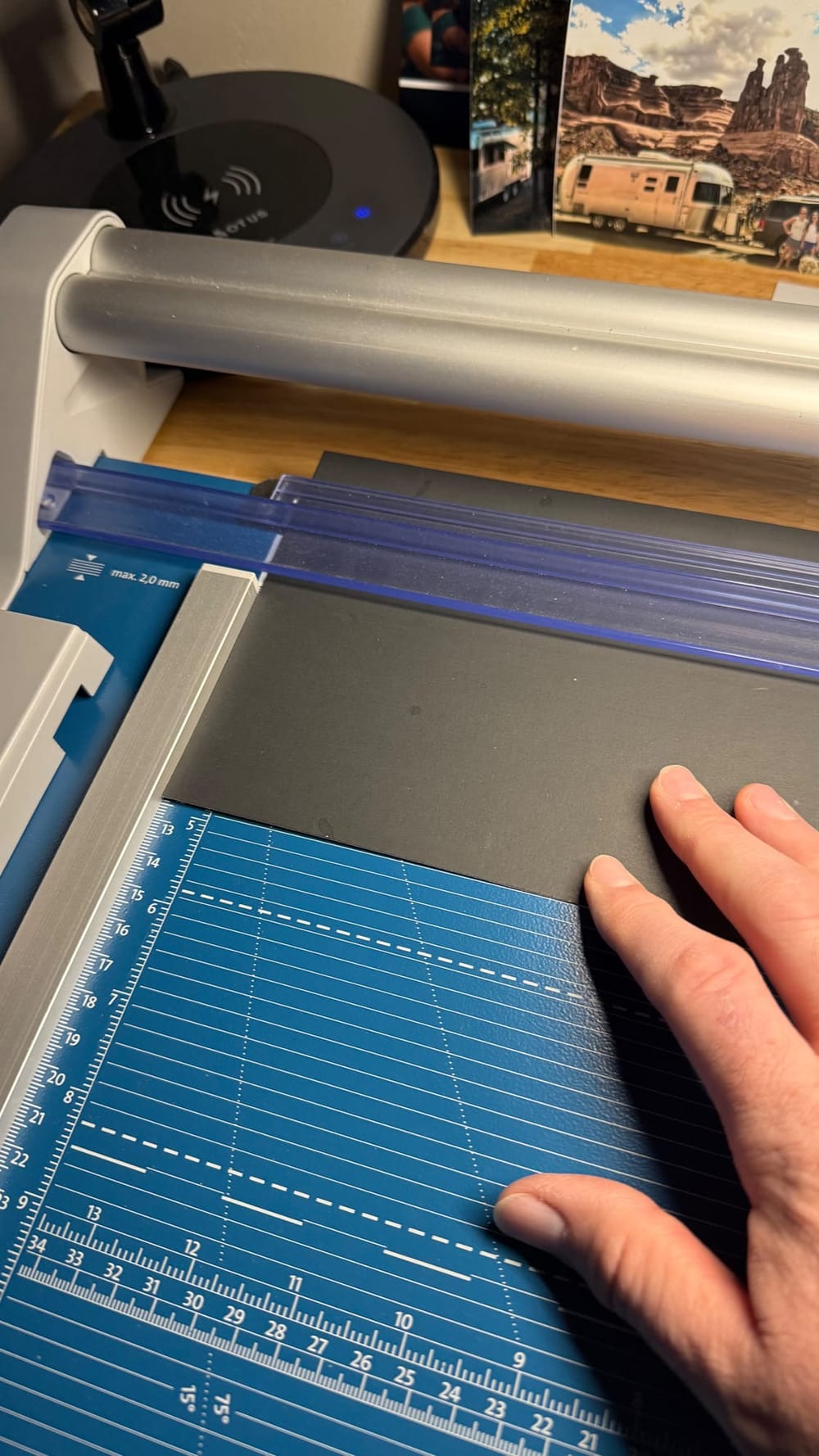
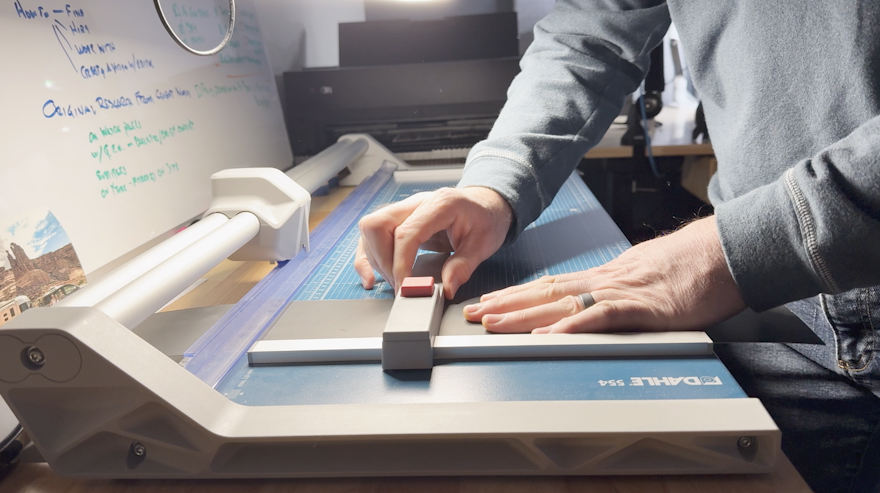
I batch-cut the backing out of giant sheets of black card stock which gives the wall cards a nice solid contrasting border to the off-white wall they'll end up on.
Then finally I glue the collage to the backing, measure the spot on the wall (so they all line up the same) and affix them with some double-sided tape.
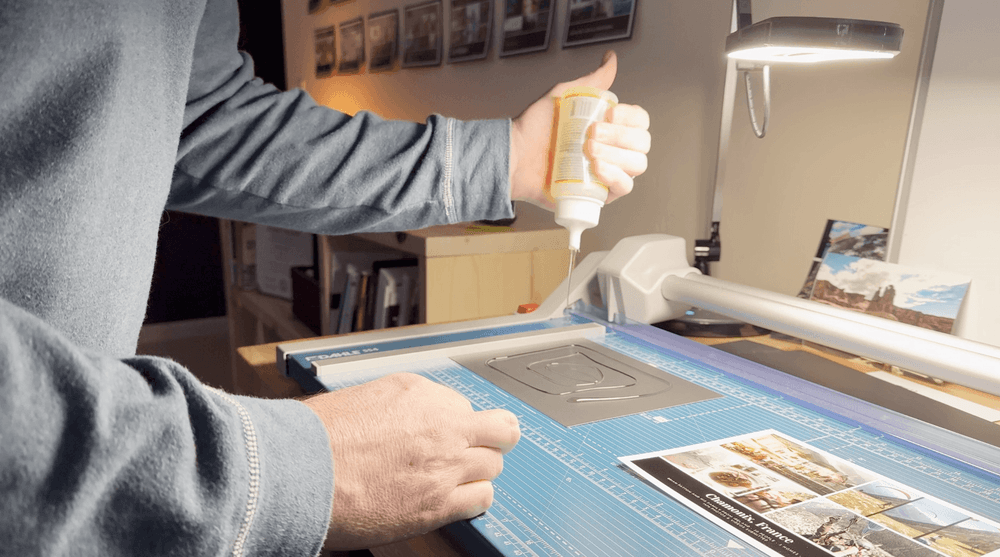
This ritual helps me preserve some of the edit for my studio, but it also helps me process that it is done. And it readies me for moving on. It's a completion ritual in many ways.
There's also something about the tangible and tactile process that helps make my digital business more....dare I say, 'real'?
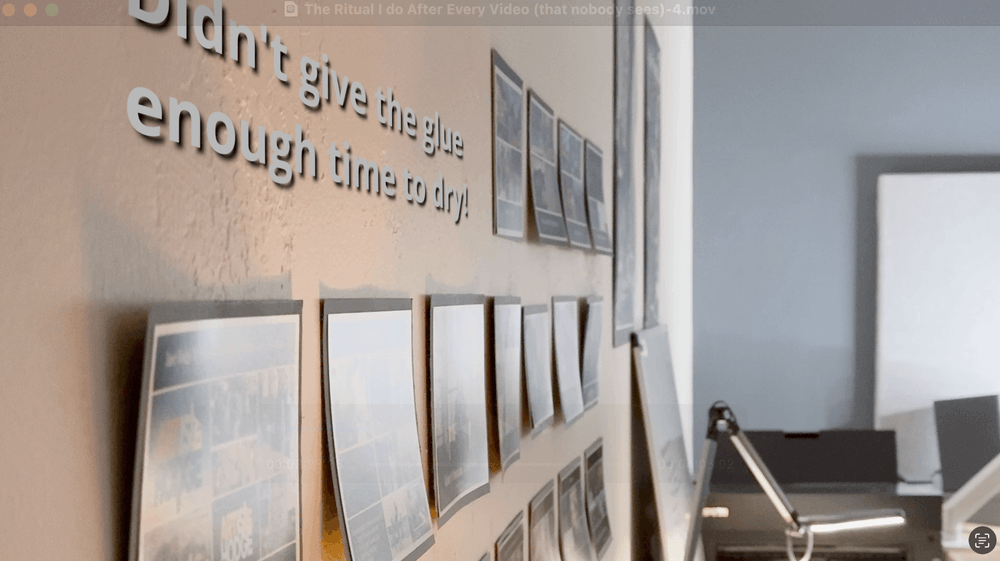
"Coffee, lights, and action."
I started making these about a year ago.
The ritual takes about an hour...which is why I don't have more on the wall...sometimes even knowing how much I get out of doing it, there simply isn't the time. Or other rituals take its place (see "Christmas Tree Decorating", "Thanksgiving House Prep for hosting family", "Holiday Party Prep", etc....) 😖-- and, let's be honest, there are some projects that I just don't need to be reminded of every day.
"It's not for the client. It's not for my portfolio. It's for me."
My everyday - get-to-work ritual looks much more like so:
I get the kids off to school, get in a good workout or a cycling class, get showered, dressed, shaved...I want to treat my day as if I am "on the clock" and amongst colleagues. It helps to take it seriously.
Then I grind up some coffee beans from Bedrock, a local roaster.
I make a pour-over, treat it with a healthy, sugarless creamer, add some foam and cinnamon and then...
I fire up the studio - it's all connected now, so I can simply say to Siri, "Turn on the studio" and the lights surrounding my 3 monitors light up the desk, the lights behind and inside of my hardware-tools cabinet flip on and rotate through a color-cycle, and 2 stage lights that are on the far wall for warmth and occasional accent lighting during filming light up.
And every day, I see the moments that taught me something, where I made a difference in someone's life, where I found something truly special that just needed a little shining up to become a legacy creation.
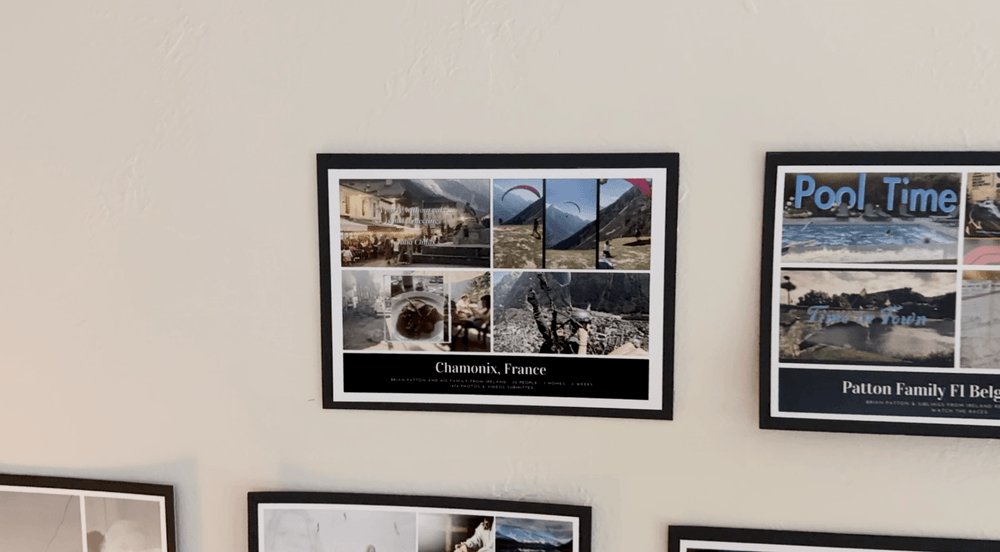
"Because when you spend 40 hours with someone's memories, they become part of yours. And this ritual lets me hold on to that, just for me."
I'm here on my own for many hours every week, trying to make sense of people's footage, while trying to make their vision for their video a reality.
"It can be a bit isolating, not that I mind, but the task of a video editor is to be on their own, for days at a time, engaged with your story."
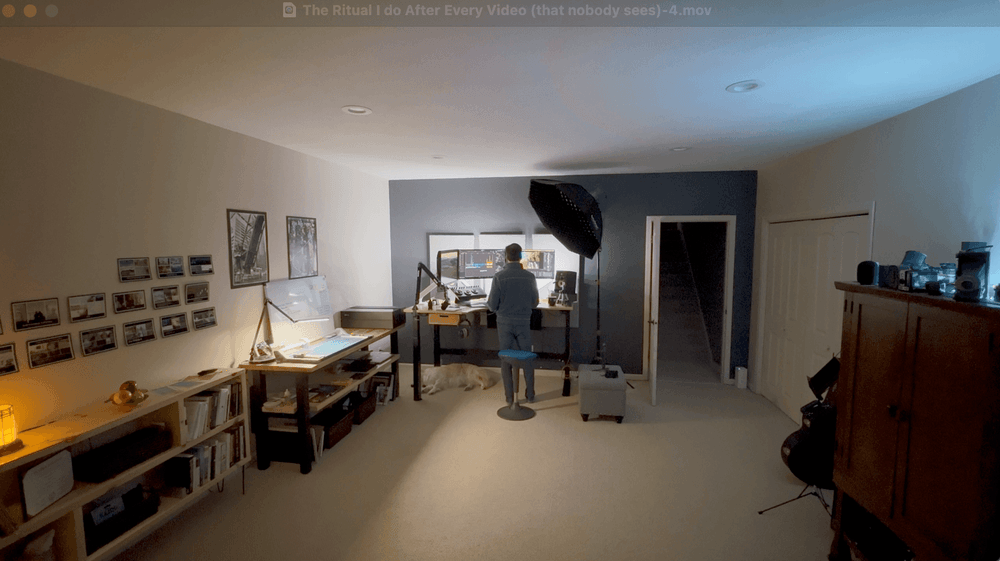
"And they remind me of the legacy videos I create for clients to preserve and celebrate their memories."
Thanks for reading this far! Let me know how I can help your family, your company, your film.
"For your own video editing project, consider finding someone who'd treat your vision for your video like it matters, because it does."
When you hire a video editor, you're not just hiring technical skills. You're hiring someone who will spend hours immersed in your story, finding the moments that matter, honoring what you're trying to preserve.
If you have a video project - family memories, a wedding, a memorial, a company story - and you want someone who treats it like it matters (because it does), let's talk.
If you have 4 minutes, feel free to watch the ritual here!
FAQ's
Q: Why do creative professionals need completion rituals?
A: "Creative projects don't have natural endpoints like clocking out of a job. Without intentional rituals to mark completion, projects blur together, making it hard to let go of one before starting the next. A completion ritual signals to your brain that this chapter is closed."
Q: How do you choose which scenes to include in your collages?
A: "I look for moments where I broke through a creative or technical wall, scenes that surprised me in the footage, or emotional peaks that captured something unexpected. These are the moments that represent not just what I made, but what I learned or felt while making it."
Q: How long does your ritual take after finishing a project?
A: "Roughly an hour."
Q: Don't you want to share these collages with clients?
A: "No - that's actually the point. These are for me. When you spend 40 hours immersed in someone's memories, they become part of yours. This ritual lets me hold onto that personal connection without turning it into a marketing tool."
Q: What supplies do you use to make the collages?
A: I don't know that it matters...if you didn't have the fine art paper and a high quality printer, you could go to a print-shop or come up with some way to take a few moments out of a video and display them.
TRANSCRIPT OF 'The Ritual I do After Every Video (that nobody sees)" VIDEO:
Daily rituals
Assembling it in the studio
The Card Wall I started a year ago
Why it matters