![[object Object]](https://umsousercontent.com/lib_LTYDFzZbGavgeLsO/e1ag7ygwxlyh8zpo.png?w=136)
What Is the Process of Creating a Legacy Video?
If you're considering a legacy video for yourself or a family member, one of the first questions is usually: how does this actually work? The process has four stages — Interview, Footage, Edit, and Delivery — and each one is more straightforward than most people expect. Here's exactly what happens, from the first conversation to the finished keepsake in your hands.
Stage 1: The Interview
The interview is the spine of the preserved story. It's the backbone of the entire edit, and everything else gets built on top of it.
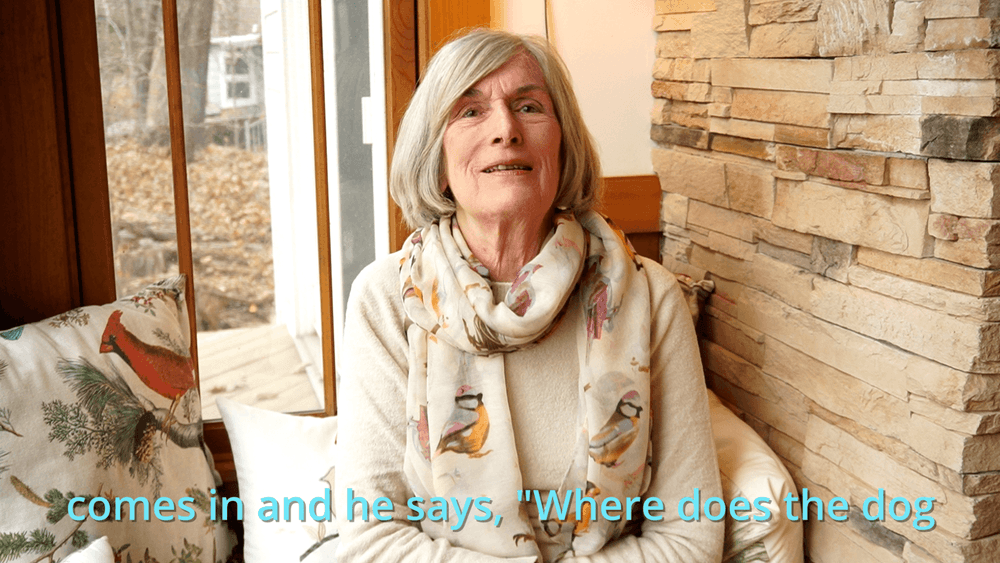
The first thing we figure out is who we're interviewing. Is it a couple — the matriarch and patriarch of the family? A surviving spouse? In one case, I have a client who is maybe 65 and he recognized from his own childhood that they didn't have a camera around, didn't preserve much. So he started early. He and his siblings — four families total — rent houses near each other every year and take a big trip together. We preserve each one of those trips as its own cinematic story, with the interview as the thread running through it.
The interview can involve one person or several. We work out the questions together in advance, customized to the story we're telling. Depending on scope, there may be more than one session. Once we're done, that recorded interview becomes the foundation that everything else is layered onto.
Stage 2: The Footage
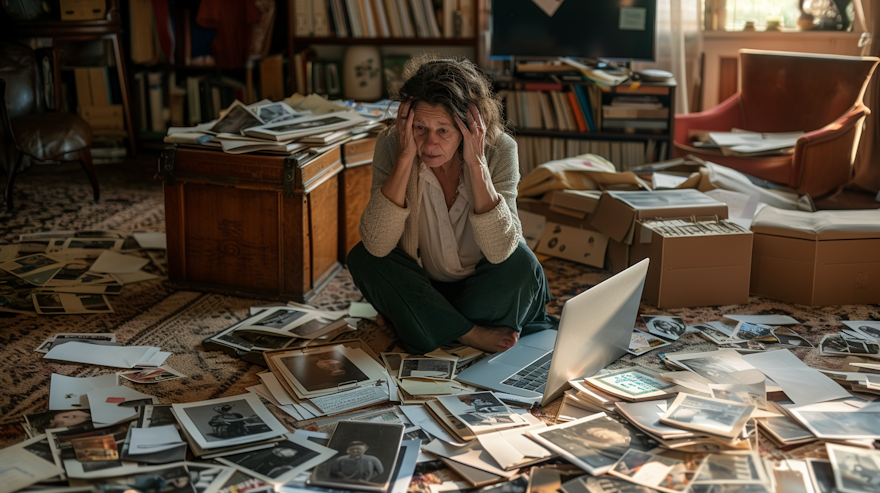
On top of the interview goes the footage — photos and video clips, typically from a wide variety of places.
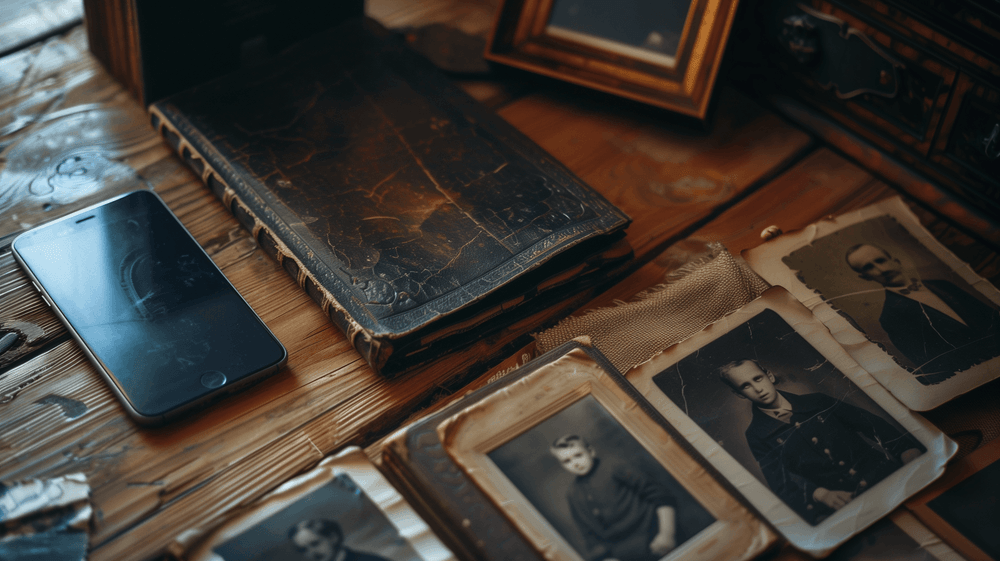
They may be on phones. They may be in picture frames that need to be pulled out and scanned. They could be in photo albums, or in shoeboxes. Video clips can be used in multiple ways — we can take individual stills from them, use sections of them, or mute the audio entirely so the image plays while the person is talking, much like you'd see in a documentary on TV.
Note: As an example, most of the images on this blog post, are stills that were taken from video clips, paused and captured. You have more usable footage than you might think!
Part of the process is identifying what we have and what we're missing. A good legacy video draws from decades of a life — and sometimes that means tracking down photos that haven't been looked at in years.
Stage 3: The Edit
This is where it all comes together — and where I work closely with you throughout, getting feedback early and often rather than disappearing for weeks and coming back with a finished film you had no input on.
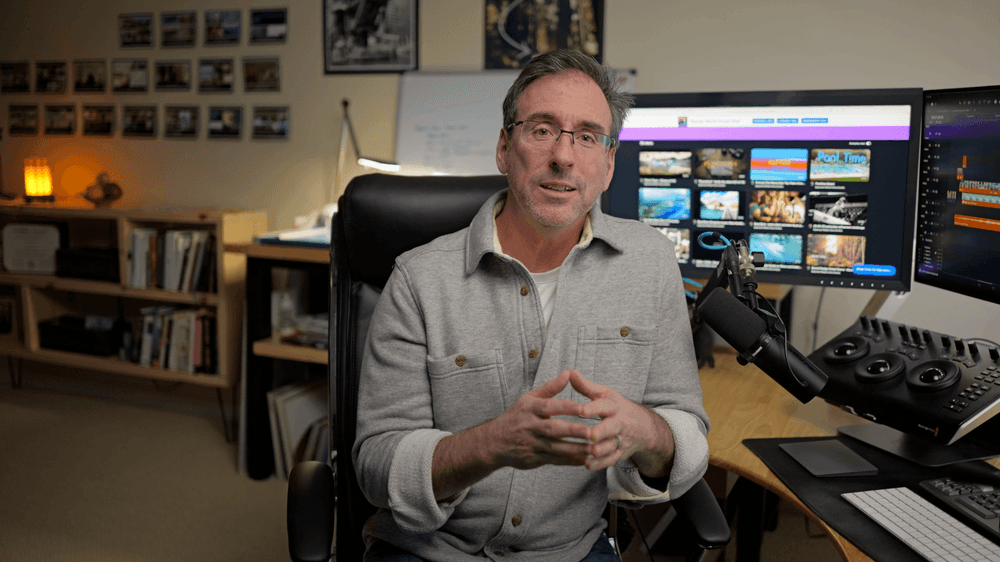
A two-hour interview typically gets broken into an estimated four sections. We work through them one at a time. For each section, I put together a rough draft — the interview audio, with photos and video laid on top to tell the story visually — and upload a low-resolution preview to Frame.io, a review platform built for exactly this kind of collaboration.
You watch it through, and if something stands out — a photo that would work better earlier, a section that ran too long, a better image you want to swap in — you pause the video, type your comment, and it drops a marker at that exact timecode. No confusion about what you meant or where in the video it was.
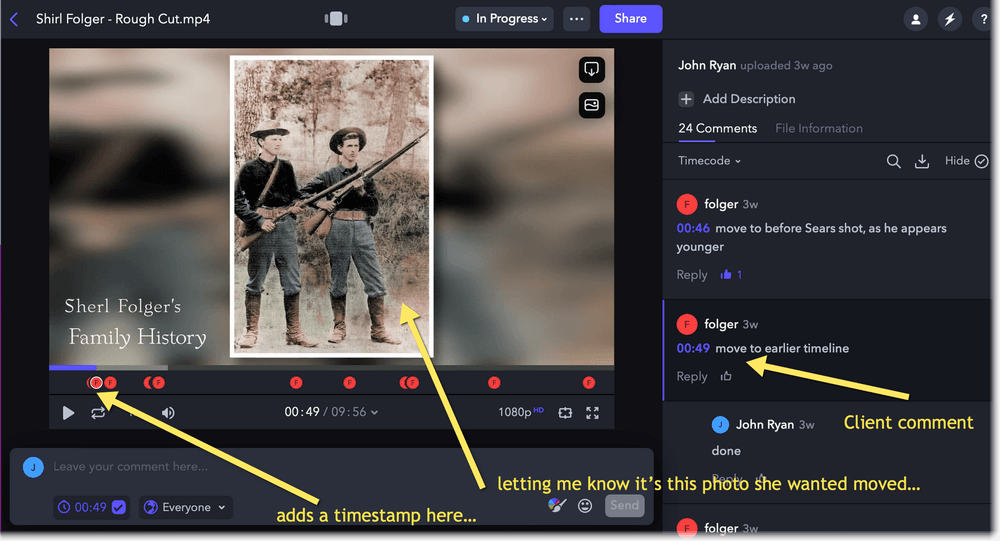
Each section typically goes through up to two rounds of feedback. By the time we reach section two or three, there's usually less to change — the style and pacing are already set, and we're really just placing footage in the right moments and trimming what doesn't belong.
Once all sections are approved, we stitch them into one complete film. Music gets added. Titles get placed — Early Years, College, Wedding, First House, Kids — or if the structure is more question-driven, the titles reflect that instead.
Then we look at what we have: typically a two-to-two-and-a-half hour film, several weeks in the making. At that point, we pull the highlights — the moments that tell the story in seven to ten minutes. That shorter version is the one you can pass around, share at a gathering, or hand to the teenagers in the family who may not sit through two hours right now but will want it later.
Stage 4: Delivery
Once the final film and highlights reel are approved, it's time to decide how this becomes a keepsake.
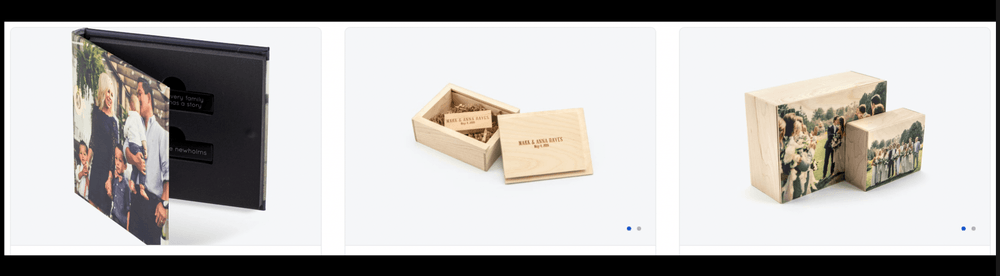
I can send the digital version immediately — that's typically when final payment is made — and you can be watching it within hours. But most clients want something physical, something that won't get lost in a folder or buried on a hard drive.
Right now I suggest one of two options. My favorite is a wooden box: the video goes onto a USB drive with a wooden handle — easy to spot, easy to grab — and that USB goes into an engraved wooden box that makes it obvious this is something worth opening. The second option is a folio, more like a book on a shelf, with a photo from the story on the front cover and foam-lined slots inside for the USB drives.
I also keep the video hosted online for up to a year, so immediate family can watch it right away if that's what the client wants. Some clients prefer the opposite — their video is an end-of-life message, not meant to be seen until after they're gone. In that case, the USB goes into an envelope with the will. That option exists too. The process is entirely customized to your situation, your family, and when and how you want this story to be seen.
Frequently Asked Questions
How long does a legacy video take to make? The timeline varies depending on scope — how many interviews, how much footage needs to be gathered, and how quickly feedback comes in. Most projects run several weeks from first interview to finished keepsake. A dedicated post covering timelines in detail is coming soon.
Do I need to have everything organized before we start? No. Part of the process is figuring out what you have and where it lives. Shoeboxes, phone cameras, old albums — we work with whatever exists and identify what's worth tracking down.
Can multiple family members be interviewed? Yes. The interview stage is flexible — it can involve one person or several, across one session or multiple.
What if I want the video kept private until after I'm gone? That's a request I've handled before. The finished video goes onto a USB drive that goes into an envelope with the will. Nothing is shared until the family decides it's time.
What happens to the video after the project is complete? I host the online version for up to a year. After that, the keepsake — the video lives on the USB (in the wooden box or folio) AND on the digital file that I transferred to you. We can discuss extended hosting or other arrangements if needed.